Construction Labourer Jobs in Italy can provide employment opportunities for candidates interested in the construction industry, building projects, road development, renovation work, and general site maintenance. Construction labourers assist skilled workers and supervisors with daily tasks such as carrying materials, preparing work areas, loading and unloading supplies, and keeping construction sites clean and organized.
These positions may be suitable for entry-level candidates as well as workers with previous construction experience. However, the duties, salary, working hours, and qualifications depend on the employer and the type of construction project.
For non-EU workers, working legally in Italy requires the appropriate work authorization. Italy’s 2026 immigration program includes quotas for eligible non-seasonal and seasonal foreign workers, with specific requirements depending on the employment category and recruitment route. Candidates should verify whether a particular construction position is eligible under the applicable immigration rules before making travel or employment arrangements.
What Is a Construction Labourer?
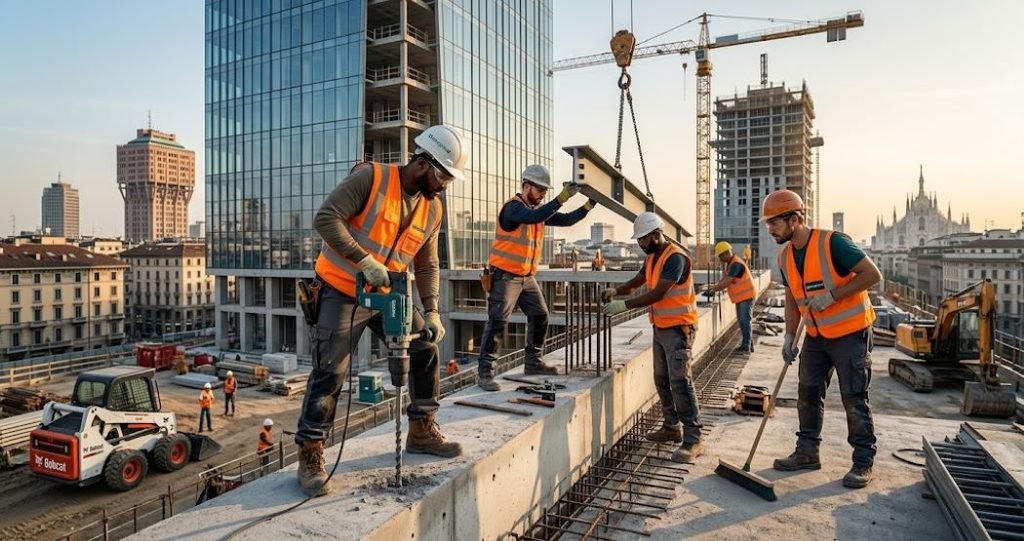
A Construction Labourer is a worker who supports construction teams by performing general duties at building sites and other construction projects. These workers help skilled tradespeople, prepare materials, move equipment, and maintain safe working conditions.
Construction labourers may work on residential buildings, commercial properties, roads, bridges, renovation projects, and infrastructure developments. The role often involves physical activity, teamwork, and following instructions from site supervisors.
Job Responsibilities
As a Construction Labourer in Italy, your daily responsibilities may include:
- Assisting skilled construction workers with general site activities.
- Loading and unloading construction materials and supplies.
- Carrying bricks, cement bags, tools, and other building materials.
- Preparing construction areas before work begins.
- Mixing and preparing basic construction materials when instructed.
- Cleaning construction sites and removing waste materials safely.
- Organizing tools, equipment, and building supplies.
- Supporting bricklayers, carpenters, painters, and other tradespeople.
- Following workplace health and safety procedures.
- Reporting damaged equipment, hazards, or work-related problems to supervisors.
Skills Required
Most entry-level construction labourer positions may require:
- Ability to work in a physically demanding environment.
- Good physical fitness and stamina.
- Ability to follow instructions from supervisors.
- Basic teamwork and communication skills.
- Awareness of construction site safety.
- Ability to handle materials carefully.
- Reliability and punctuality.
- Willingness to work outdoors in different weather conditions.
- Ability to work flexible hours when required.
- Previous construction or general labour experience is an advantage.
Salary of Construction Labourers in Italy
The salary of a construction labourer in Italy varies according to the employer, location, experience, working hours, job responsibilities, and applicable collective employment agreement.
Indicative monthly salary ranges may be:
- Entry-Level Construction Labourer: €1,200–€1,500 per month
- Experienced Construction Labourer: €1,400–€1,800 per month
- Skilled General Construction Worker: €1,600–€2,000 or more per month, depending on the position and contract
These figures are general estimates, not a confirmed salary offer for a specific vacancy. Actual earnings may differ, and overtime or additional allowances depend on the employment contract and applicable rules.
Applicants should always confirm the gross salary, expected take-home pay, working hours, overtime arrangements, and deductions directly with the employer before accepting an offer.
Employee Benefits
Depending on the employer and employment contract, construction labourers may receive:
- Monthly Salary
- Paid Annual Leave
- Social Security Contributions
- Applicable Health and Workplace Injury Protection
- Overtime Pay, Where Applicable
- Additional Payments Under the Relevant Employment Agreement
- End-of-Employment Benefits, Where Applicable
- Accommodation, Where Specifically Offered
- Transportation Support, Where Specifically Offered
- Workplace Safety Equipment
Not every employer provides accommodation, transportation, or additional allowances. Candidates should check the written employment contract to understand which benefits are included.
Qualifications
Many entry-level construction labourer positions may require:
- Basic education, depending on the employer.
- Previous construction experience, although some employers may consider beginners.
- Good physical condition for lifting and moving materials.
- Ability to stand, walk, and work for extended periods.
- Understanding of basic construction site safety procedures.
- Willingness to follow instructions and work as part of a team.
- Valid passport and required immigration documents for international applicants.
- Relevant safety training or certifications, where required.
- Basic Italian communication skills, which may be helpful.
- Legal authorization to work in Italy before starting employment.
Specific qualifications may vary according to the project, employer, and nature of the work.
Where Construction Labourers Can Find Jobs
Construction labourer opportunities may be available in different areas of Italy’s construction and infrastructure industry, including:
- Residential Building Construction
- Commercial Building Projects
- Road Construction and Maintenance
- Bridge and Infrastructure Projects
- Building Renovation Companies
- Demolition and Site Preparation
- Masonry and Bricklaying Support
- Concrete and Foundation Work
- Construction Material Handling
- Industrial Construction Projects
Availability depends on local construction demand, the employer’s recruitment needs, and the candidate’s eligibility to work.
Working Hours
Working hours depend on the construction company, project schedule, and employment agreement. A construction labourer may work:
- Approximately 8 Hours Daily, Depending on the Contract
- 5–6 Days Per Week, Where Scheduled
- Morning or Day Shifts
- Additional Hours When Legally Permitted and Required
- Overtime According to the Applicable Employment Agreement
Construction work may be affected by weather conditions, project deadlines, and site-specific safety requirements. Applicants should confirm the normal weekly working hours and overtime arrangements before accepting a position.
Can Foreign Workers Apply?
Yes, non-EU citizens may be eligible for construction employment in Italy if they meet the applicable immigration and work-authorization requirements.
Italy’s immigration system includes the Decreto Flussi, which establishes annual entry quotas for certain categories of foreign workers. However, the existence of immigration quotas does not mean that every construction labourer vacancy is automatically eligible for recruitment from outside the EU.
For a candidate living outside Italy, the employer generally needs to follow the relevant recruitment and authorization procedure, including obtaining a nulla osta (work authorization clearance) where required. The worker must then complete the applicable visa and entry procedures.
Before accepting a position, candidates should verify:
- Whether the employer is authorized to recruit foreign workers.
- Whether the position qualifies under the applicable immigration route.
- Whether a quota place is available, where required.
- Whether the employer will complete the necessary authorization procedures.
- Whether the written job offer and employment contract are genuine.
- Whether the visa application requirements have been met.
Never assume that a job offer guarantees a work visa. Verify immigration information through official Italian government or embassy channels.
Who Can Apply?
Construction Labourer Jobs in Italy may be suitable for:
- Freshers Interested in Construction Work
- General Labourers
- Experienced Construction Workers
- Building Site Helpers
- Masonry Assistants
- Material Handlers
- Demolition and Site Preparation Workers
- Warehouse and Manual Labour Workers Seeking Construction Roles
- Candidates With Relevant Construction Experience
- Eligible International Applicants
The employer will determine the final selection criteria based on the vacancy and the candidate’s qualifications.
How to Apply
Are you on the hunt to Construction Labourer Jobs in Italy? We’re here to help you take the next step! Send your updated CV to the email address below, and we’ll connect you with the right opportunities.
Email: —
Tips to Get Hired Faster
- Create a clear and professional CV.
- Highlight previous construction, building, or general labour experience.
- Mention any relevant safety training and certifications.
- Describe your experience handling construction materials and tools.
- Learn basic Italian words used on construction sites.
- Be prepared for physical work and outdoor conditions.
- Search for vacancies through legitimate employers and recruitment agencies.
- Confirm the salary, working hours, and employment conditions in writing.
- Check whether accommodation and transportation are actually included.
- Verify the employer and work authorization process before paying any recruitment-related fees.
Conclusion
Construction Labourer Jobs in Italy may offer opportunities for candidates interested in building projects, infrastructure development, renovation, and general construction work. These roles can suit entry-level applicants as well as experienced workers who have the physical fitness, reliability, teamwork, and safety awareness required for construction sites.
For international applicants from outside the EU, obtaining a genuine job offer and the appropriate work authorization is essential. Recruitment eligibility depends on the employer, the position, the applicable immigration route, and any relevant quota requirements.
Before applying, carefully review the employment contract, salary, working hours, benefits, and visa procedures. Use reliable recruitment sources and official government information to make informed decisions about working in Italy.