Meat cutting jobs in Canada offer employment opportunities in meat processing factories, slaughterhouses, butcher shops, food production plants, and packaging facilities. Meat Cutting Jobs in Canada may be suitable for candidates interested in food processing, meat preparation, cutting, trimming, packaging, and preparing meat products for storage and distribution.
These jobs may be available to entry-level candidates as well as experienced meat cutters, depending on the employer’s requirements. Applicants should understand the job responsibilities, salary expectations, qualifications, working conditions, and legal requirements before applying.
For foreign workers, working legally in Canada requires the appropriate work authorization. International applicants should check whether an employer is authorized to hire foreign workers and whether they meet the requirements of the applicable Canadian immigration program.
What Is a Meat Cutting Worker?
A Meat Cutting Worker is responsible for cutting, trimming, preparing, and processing different types of meat according to workplace standards. These workers may use knives, cutting tools, and specialized processing equipment to prepare meat products for sale, packaging, or distribution.
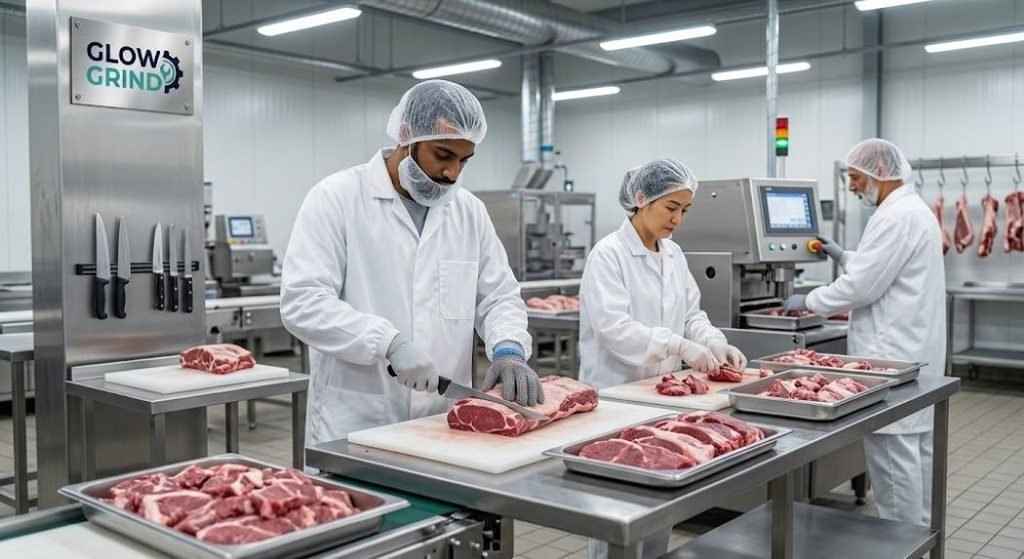
Job Responsibilities
As a Meat Cutting Worker in Canada, your daily responsibilities may include:
- Cutting and trimming meat according to company standards.
- Preparing beef, pork, poultry, and other meat products.
- Removing bones, excess fat, and unwanted tissue where required.
- Sorting and inspecting meat products before packaging.
- Operating approved cutting and processing equipment.
- Weighing and portioning meat products according to specifications.
- Packing and labeling finished meat products.
- Maintaining cleanliness in the processing and cutting areas.
- Following food hygiene and workplace safety procedures.
- Reporting damaged products, equipment problems, or quality concerns to supervisors.
Skills Required
Most meat cutting positions may require:
- Ability to work in a fast-paced environment.
- Physical fitness and stamina.
- Good hand-eye coordination.
- Attention to detail.
- Ability to handle knives and cutting tools safely.
- Understanding of food hygiene and sanitation.
- Ability to follow instructions and safety procedures.
- Teamwork and cooperation.
- Willingness to work shifts.
- Previous meat cutting or food processing experience is an advantage.
Salary of Meat Cutting Workers in Canada
Salary varies according to the employer, province, experience, job responsibilities, working hours, and applicable employment agreement.
Typical salary expectations may include:
- Entry-Level Worker: CAD $2,500–$3,200 per month
- Experienced Meat Cutter: CAD $3,000–$4,000 per month
- Skilled or Specialized Worker: CAD $3,500–$4,500 or more per month
These figures are indicative estimates, not guaranteed wages for a particular vacancy. Actual earnings depend on the hourly wage, number of hours worked, overtime, and deductions. Applicants should compare offers with current Canadian wage information and confirm the pay stated in their employment contract.
Employee Benefits
Depending on the employer and employment contract, workers may receive:
- Monthly Salary
- Paid Annual Leave
- Applicable Public Holiday Pay
- Employment Insurance and Other Applicable Contributions
- Workplace Safety Coverage
- Overtime Pay Where Applicable
- Shift Allowances, Where Offered
- Employer-Sponsored Training
- Accommodation, Where Specifically Offered
- Transportation Assistance, Where Specifically Offered
Benefits are not automatically included in every meat cutting job. Applicants should carefully review the employment contract to understand the salary, deductions, benefits, and other conditions.
Qualifications
Many meat cutting positions may require:
- Basic education, depending on the employer.
- Previous meat cutting or food processing experience, where required.
- Good physical condition.
- Ability to stand for extended periods.
- Ability to work in cold processing environments.
- Knowledge of safe knife handling and food hygiene.
- Ability to follow workplace safety instructions.
- A valid passport and required immigration documents for international applicants.
- Relevant training or certification, where required by the position or province.
Some employers may provide on-the-job training for entry-level processing positions. However, skilled meat cutting roles may require practical experience and the ability to perform specific cutting techniques.
Where Meat Cutting Workers Can Find Jobs
Meat cutting opportunities may be available in:
- Meat Processing Factories
- Slaughterhouses and Meat Packing Plants
- Beef Processing Facilities
- Pork Processing Facilities
- Poultry Processing Plants
- Butcher Shops
- Food Production Companies
- Frozen Meat Processing Facilities
- Meat Packaging Factories
- Food Distribution Centers
Working Hours
Depending on the company and production schedule, employees may work:
- 8 Hours Daily
- 5 Days Per Week or Other Scheduled Shifts
- Morning or Evening Shifts
- Night Shifts in Some Processing Plants
- Weekend Shifts Where Required
- Overtime When Available and Permitted
Working conditions can vary. Meat processing workers may need to stand for long periods, work in refrigerated areas, handle sharp tools, and follow strict hygiene procedures.
Can Foreign Workers Apply?
Yes, foreign workers may be eligible for meat cutting jobs in Canada if they meet the relevant employment and immigration requirements.
However, finding a job does not automatically guarantee a Canadian work permit. Employers may need to obtain a Labour Market Impact Assessment (LMIA), unless an exemption applies. The worker must also meet the requirements of the relevant work permit or immigration program.
Applicants living outside Canada should verify the employer, job offer, and immigration process before making travel arrangements or paying any recruitment-related costs.
Who Can Apply?
Meat Cutting Jobs in Canada may be suitable for:
- Freshers interested in food processing.
- Experienced Meat Cutters.
- Butchers.
- Meat Packing Workers.
- Factory Workers.
- Food Processing Workers.
- Production Helpers.
- Workers with Manufacturing Experience.
- Eligible International Applicants.
The exact eligibility requirements depend on the employer, job duties, and applicable immigration program.
How to Apply
Are you on the hunt to Meat Cutting Jobs in Canada? We’re here to help you take the next step! Send your updated CV to the email address below, and we’ll connect you with the right opportunities.
Email: —
Tips to Get Hired Faster
- Create a simple and professional CV.
- Highlight meat cutting, butchering, or factory experience.
- Mention your knowledge of food hygiene and workplace safety.
- Explain your ability to work in cold environments and follow production schedules.
- Be prepared for practical skills assessments where required.
- Apply through legitimate Canadian employers and recruitment platforms.
- Check whether the vacancy accepts applications from foreign workers.
- Verify any LMIA or work permit claims through official sources.
- Never pay large sums to an unverified person for a promised job or visa.
- Carefully review the salary, working hours, accommodation arrangements, and employment contract before accepting an offer.
Conclusion
Meat Cutting Jobs in Canada may provide opportunities for candidates interested in meat processing, butchering, food production, packaging, and factory work. Entry-level positions may offer training, while experienced meat cutters may qualify for roles requiring specialized cutting skills.
For applicants outside Canada, the most important step is to find a legitimate employer and understand the relevant work authorization requirements. Salary, benefits, job availability, and eligibility vary by employer and province, so candidates should verify the details before applying.